
Power Surge in Allentown: What Causes It, What Does It Damage, and How Can You Protect Your Home?
A power surge in Allentown can feel random, but it usually has a clear cause. It can happen after a thunderstorm near Cedar Beach Park. It can also happen during utility switching on the grid. Many homeowners notice it when their lights blink on Hamilton Street. Others notice it when the TV resets near the Lehigh Valley Mall. Either way, a power surge in Allentown can damage devices fast. It can also weaken wiring connections over time. If you want real protection, you need to understand the risks. You also need a plan that matches your home’s electrical system.
A surge is a quick spike in voltage. Even a momentary electrical surge, lasting only microseconds, can cause significant damage. It can destroy equipment like modems, routers, and smart thermostats. Furthermore, it can reduce the lifespan of HVAC control boards and refrigerators.
Many people buy a surge protector power strip and stop there. That helps with small, everyday spikes in a room. But it does not protect the entire house. For broader electrical safety education, ESFI has strong guidance for homeowners.
What Most Often Causes a Power Surge in Allentown?
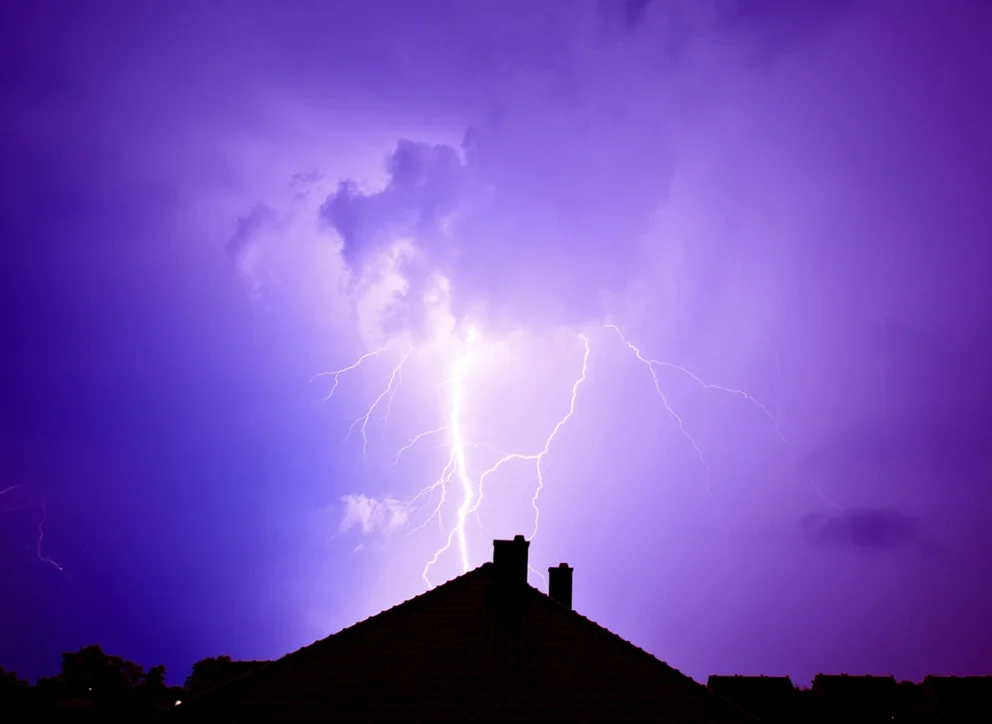
A power surge in Allentown is commonly linked to storms, lightning, and grid events. Summer weather around the Little Lehigh Parkway can bring intense lightning activity. Utility switching can also create surges, especially during restoration work. Large motors inside homes can also create internal surges. Think of HVAC compressors cycling on during humid weeks. Think of sump pumps running after heavy rain near Jordan Creek. Those smaller surges add up and put stress on electronics.
A neighborhood power outage in Allentown can often lead to a subsequent surge. When the electricity returns, the simultaneous startup of all devices creates a rush of power that can overstress circuits and damage sensitive electronic boards. A surge protector power strip can reduce the risk for devices plugged into it. But your furnace control board is not plugged into a strip. Your dishwasher circuit is not plugged into a strip. That is why layered protection matters. If you also rely on medical devices or work remotely, stability matters even more. A backup generator can help you ride through outages without scrambling.
What a Surge Can Damage
An Allentown power surge poses a risk, often leading to damage to electronic devices. TVs can fail or lose HDMI ports. Routers can die and leave your home offline for days. Gaming consoles and computers can suffer power supply failure. But many surge problems are hidden at first. Devices might still turn on after a surge, then fail weeks later. That delayed failure is common after repeated smaller surges.
A surge can also affect major appliances. Refrigerators and freezers rely on control boards. Modern washers and dryers use sensitive electronics too. HVAC systems often take the biggest hit. If your heat pump or air handler is near the end of its life, a surge can finish it.
A surge protector power strip will not protect those dedicated circuits. That is why many homeowners combine point-of-use strips with whole-home protection.
For fire safety and electrical risk reduction basics, NFPA resources are a helpful reference point.
Why a Surge Protector Power Strip Helps, and Where It Falls Short
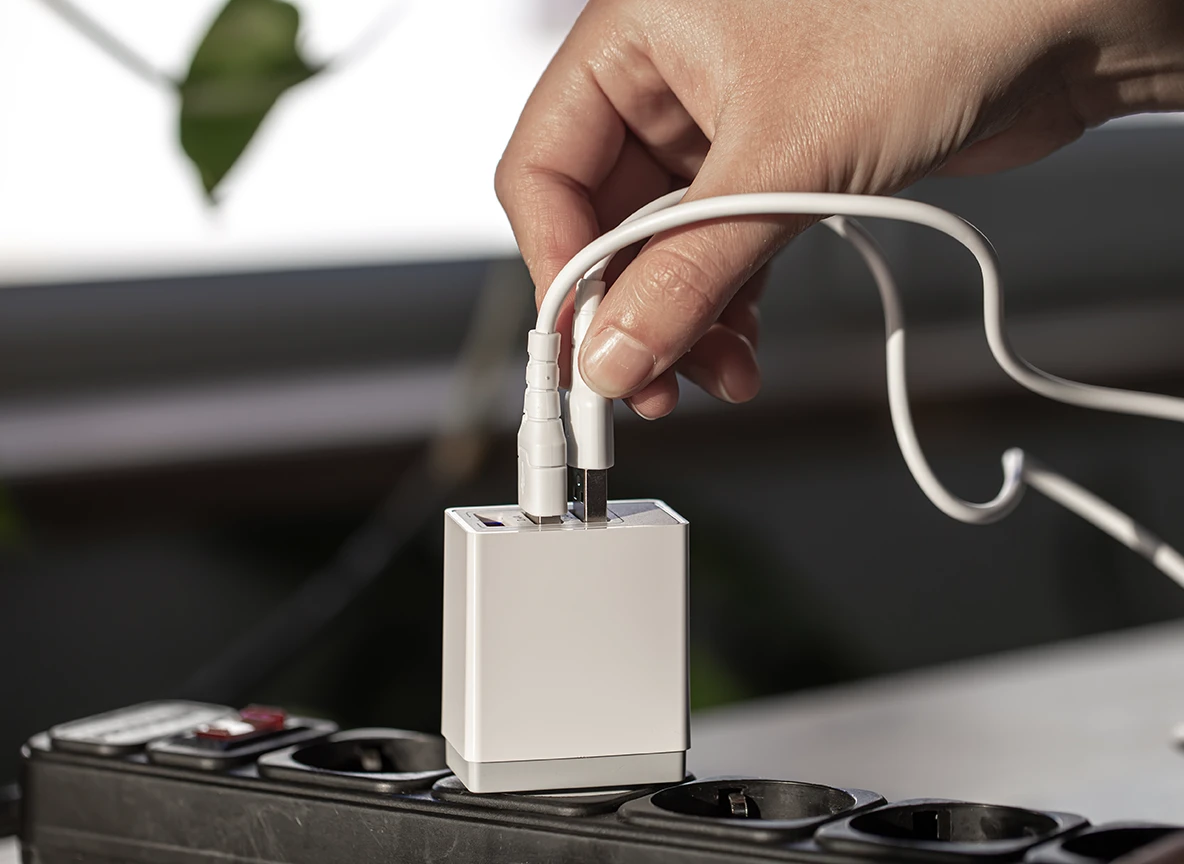
A surge protector power strip is useful when it is high quality and used correctly. It helps protect TVs, modems, computers, and chargers. By reducing wear from routine voltage spikes, these devices offer protection.
However, not all strips are genuinely protective; some function merely as power taps with an added switch. Others are worn out and no longer clamp surges effectively. Many people never check the indicator light on their power strip.
By its design, a surge protector power strip has limitations. It provides protection only to devices directly plugged into it, and it cannot protect hardwired systems, such as an HVAC unit. Similarly, it cannot protect a built-in microwave circuit, your electrical panel bus bars, or breaker connections. Space heaters and other high-wattage devices pose a risk of heat and fire because their high power consumption can lead to misuse.
Use strips only for appropriate loads and avoid daisy-chaining multiple strips. ESFI has safety guidance that reinforces safe usage habits.
Whole-Home Surge Protection: The Best Defense for a Power Surge
The optimal way to manage a surge is through a system of layered protection, starting with a whole-home surge protective device installed at your electrical panel. That device helps clamp large surges before they spread, protecting circuits feeding appliances, HVAC, and hardwired equipment. It also helps to protect multiple rooms at once. That is why it pairs well with a surge protector power strip for sensitive electronics.
A power surge in Allentown can also expose weak connections in your panel. Loose lugs and worn breakers can worsen voltage issues. If you see flickering lights when the HVAC starts, you may need diagnostics. That is when enlisting the help of a licensed electrician matters.
You can explore panel help on our service pages:
When a Backup Generator Makes Sense
Storms bring more than just the risk of a power surge in Allentown. Some events can cause outages that persist for many hours or even longer. That is where a backup generator becomes more than a convenience. It keeps sump pumps running in the basement; it keeps refrigerators cold during extended outages; it maintains power for lights and Wi-Fi, supporting remote work; and it also supports medical equipment in critical situations.
A backup generator must be installed correctly and safely. Improper generator use can cause carbon monoxide poisoning. The backfeed generated can also pose a risk to utility workers and neighboring residents.
CDC guidance stresses running generators well away from doors, windows, and vents. A generator should be paired with a proper transfer switch and sized to match your loads and priorities. If you are planning generator work, it should be done by a licensed electrician.
Visit our Generator Installation page for more information.
What To Do Right After a Power Surge
A surge should trigger a quick safety check. Start by unplugging sensitive electronics if you see them repeatedly blinking. Check whether any outlets smell hot or look discolored. If a circuit breaker trips, attempt to reset it only once. If it immediately trips again, stop all attempts and contact an electrician. A buzzing sound near the electrical panel also requires immediate attention.
In Allentown, a power surge can cause GFCI outlets to trip, which is a common occurrence in areas like kitchens, bathrooms, basements, and garages. Reset them only if everything looks normal. If they won’t reset, you may have a fault that needs testing. Do not open the panel or attempt a DIY breaker replacement.
If you want safe, professional electrical troubleshooting, JEOAH Electric can diagnose the root cause. A surge protector power strip can be replaced quickly, but panel issues require proper tools and training.
How To Reduce the Odds of Another Power Surge Damaging Your Home
Any surge is hard to prevent at the grid level. But you can reduce damage risks at the level of your home. Start with layered surge protection. Combine whole-home protection with a surge protector power strip for your TV, modem, and computers. Replace old strips that no longer show protected status and avoid plugging high-watt heaters into strips.
A healthy electrical system significantly minimizes the threat of a power surge in Allentown. This involves maintaining tight, code-compliant connections and ensuring breakers are functioning correctly. Older homes, in particular, may benefit from a professional panel evaluation. Additionally, if you plan to add any electrical loads, such as EV charging, then assessing your system's capacity is essential.
Areas We Serve Across Allentown and the Lehigh Valley
JEOAH Electric helps homeowners dealing with surge concerns across the region, including:
- Allentown
- Bethlehem
- Coplay
- Easton
- Emmaus
- Lehighton
- Macungie
- Nazareth
- Northampton
- Palmerton
- Schnecksville
- Slatington
- Walnutport
- Whitehall
- Surrounding Lehigh County neighborhoods
Power Surge Assistance in Allentown: Available Now
If you’re dealing with a power surge problem, don’t just guess and don’t wait for the next surge to take out another device. JEOAH Electric can inspect your electrical panel, troubleshoot unstable power, and recommend the right mix of whole-home protection and a surge protector power strip strategy.
If outages are part of the problem, we can also discuss a backup generator plan that fits your home and priorities.
Call JEOAH Electric at (484) 276-2794 or visit our Contact page to schedule your service.